Since January 1, a small slice of every Hawaii hotel bill has had its own name: the Green Fee. The state council that recommends how to spend it has now opened an online portal asking the public for ideas, and November 1 is the cutoff for its next round. We pay this tax on every stay, so we went and read the list. We found five ideas that name Waikiki, and all five are marked Not Recommended.
What happened
Aloha State Daily reported on October 21 that the Green Fee Advisory Council has opened a public ideas portal. Ideas have to fit one of three categories: environmental stewardship, climate resilience and hazard mitigation, or sustainable tourism. Anyone can submit one or upvote someone else’s.
The council’s own ideas page sets the deadline: submissions “received by 11:59 p.m. on November 1, 2026” will be considered for its FY28 and FY29 priorities. The page does not name a time zone. The portal stays open after that, but later ideas go to the next funding cycle.
The council chair, Jeff Mikulina, said submitting an idea does not guarantee funding, according to Aloha State Daily. The outlet reports that last year the council received hundreds of proposals with a combined projected budget over $2 billion, which is why the list has to be cut down so hard.
What the Green Fee actually is
The Green Fee is not a separate tax. The official FAQ says it “is a portion of the Transient Accommodations Tax (TAT).” The Department of Taxation’s June 2025 announcement gives the numbers: Act 96 raised the state TAT by 0.75 points, from 10.25% to 11.00%, effective January 1, 2026. The same announcement applies the 11% rate to “resort time share vacation units” as well as hotels. So this is not only a cash-guest story. It reaches HGV stays too, though how a resort passes the tax on to owners is the resort’s business, and we will not guess at it here.
The Green Fee site says the fee brings in roughly $100 million a year, split about equally across the three categories. In the first cycle, the council looked at more than 500 ideas, the governor sent 75 of its recommendations to the Legislature, and the Legislature funded 49.
What it changes for a Waikiki stay
The portal itself changes nothing about your bill. The rate went up in January and that is already priced into every booking since. For scale, here is what the 0.75-point Green Fee slice works out to. The nightly rates are examples, not quotes:
| Nightly room rate | Green Fee slice per night (0.75%) | Over 10 nights |
|---|---|---|
| $200 | $1.50 | $15.00 |
| $300 | $2.25 | $22.50 |
| $450 | $3.38 | $33.75 |
That is only the state TAT increase. It is not your whole tax line, and other taxes and fees on a Honolulu folio are a separate subject.
The part that does touch a stay is where the money goes. On the Green Fee site, “sustainable tourism” explicitly includes beach and park improvements, which it describes as “improving safety, erosion control and facilities at high-use sites.” Waikiki is about as high-use as Hawaii gets.
The Waikiki ideas we found
We searched the portal for “Waikiki” on October 22. Five of the results name it. All five carry the status “Not Recommended,” which the ideas page defines as reviewed by the council but not recommended. You can still vote and comment on them.
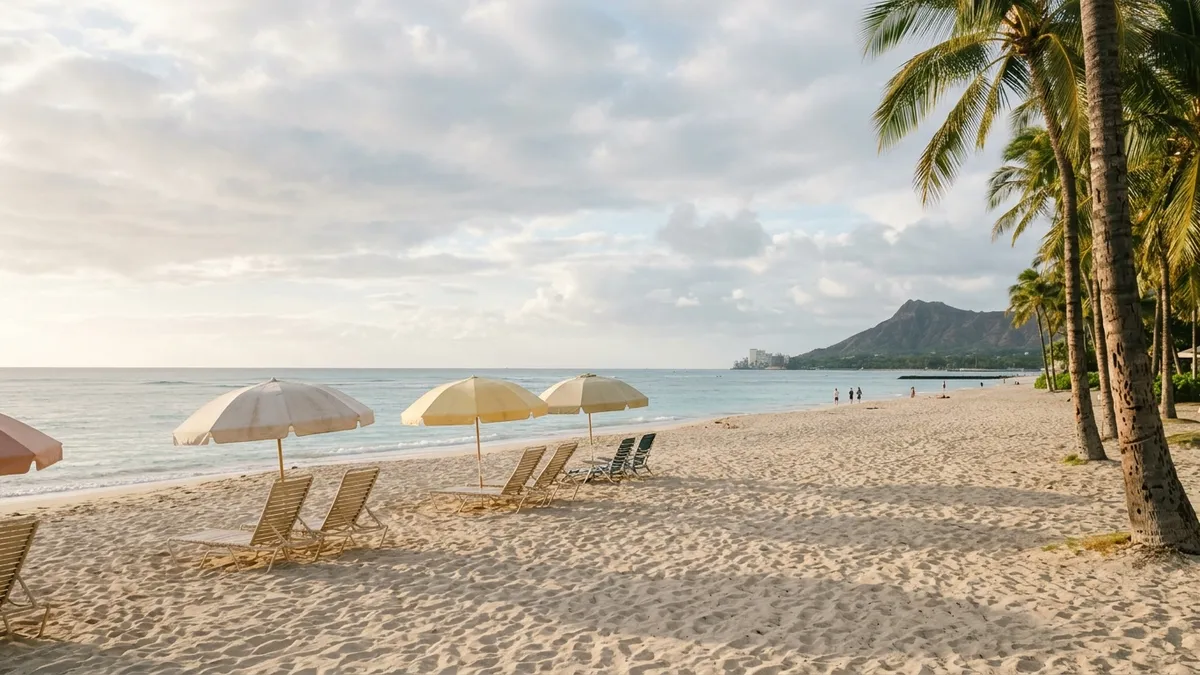
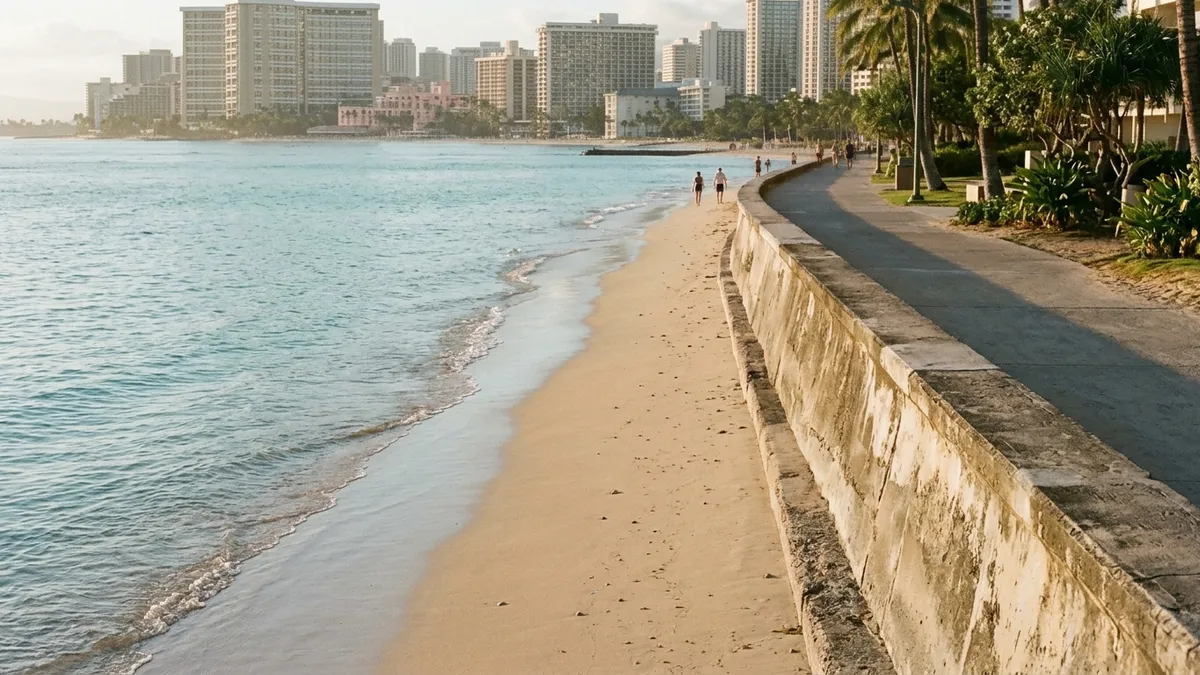
- Ft. DeRussy - Beach: add sand at the Fort DeRussy end of Waikiki. The person who submitted it says the beach there “has disappeared,” leaving a drop of over ten feet from the walkway under certain tidal conditions. It also names the Halekulani area as a priority.
- Waikīkī FloodWatch: sensors and cameras in storm drains and on roadways to track king tides, drain backflow and other flooding.
- Waikīkī Storm Water Infrastructure Assessment: inspect the aging city storm drains. The submission says most of them are past their intended lifespan.
- Phased Risk Reduction: Ala Wai Watershed & Waikīkī: pull existing flood studies for the Ala Wai and Waikiki into one plan.
- Adapting the Built Environment for Sea Level Rise: design work on elevated streets, stormwater capture and coastal infrastructure for Waikiki flooding.
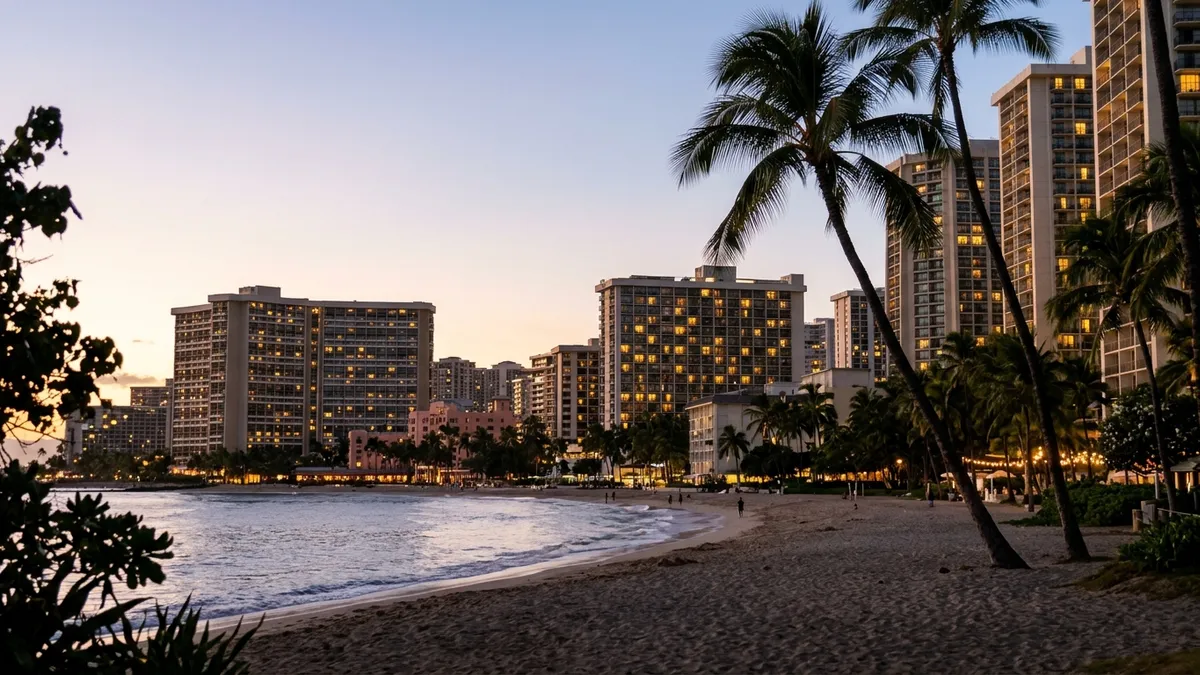
These descriptions come from the submissions (the portal notes some were summarized or paraphrased), not findings by the council. The beach one stopped us, though. Fort DeRussy is part of the flat stretch we walk on a normal afternoon, and “the beach has disappeared” is not something you expect to read about a beach you walk past.
What we would do — and what we wouldn’t
We’re going to read, not vote. The council is asking what Hawaii should prioritize, and the people who live there should answer that. Two visitors who come twice a year don’t need to tip the scale. And the official page says plainly that votes and comments “do not independently determine which projects are recommended or funded.”
If we were picking, though, it would be the walking stuff: sand where the beach is thin, and streets and drains that don’t flood on a king tide. We don’t drive, so for us Waikiki is a beach path and a few sidewalks. That is the part of the tax we’d most like to see come back as something we can stand on.
If you visit often and have something specific to add, like a spot on the beach path that floods or a stretch where the sand is gone, a comment on an existing idea is the cheap way to help. The ideas page asks you to check for an existing idea before posting a new one. You need a free account to vote or comment, and each account gets one upvote per idea.
Our booking plans don’t change either way. The tax is the same 11% whichever idea wins.
Before you plan around this
- The deadline is for this round only. Ideas received by 11:59 p.m. on November 1, 2026 count toward the FY28 and FY29 recommendations. The page gives no time zone, so don’t leave it to the last evening.
- An idea is not an application. The FAQ says that in the first round, only formal state agency proposals were evaluated for recommendation. Public ideas informed priorities but “did not guarantee selection or implementation.”
- The Legislature decides. The council recommends, the governor picks what goes into the executive budget, and the Legislature makes the final funding decision.
- Statuses change. The five Waikiki ideas were “Not Recommended” when we checked on October 22, 2026. That could change in the next review.
- Tax rates are as of the Department of Taxation’s June 9, 2025 announcement, checked October 22, 2026.
Re-check everything on the Green Fee ideas page and the FAQ before you post. Questions about the portal go to [email protected], per the ideas page.
This is our reading of public tax and budget information as of October 2026, not tax or legal advice; verify current rates with the Hawaii Department of Taxation.