On Friday, November 13, the FAA stopped departures at airports across the U.S. for roughly four hours, and Honolulu caught the mainland side of it. Interisland flights kept going; flights to and from the West Coast and beyond were the ones that slipped or got canceled. We read the local coverage the way we read anything about airports: what would we have done if that had been our checkout day?
What happened
According to the Honolulu Star-Advertiser, the nationwide ground stop began just before 11 a.m. Hawaii time and ended around 3:15 p.m. Other outlets put the end a few minutes later: Hawaii Public Radio’s AP-based report says the Hawaii Department of Transportation (HDOT) said it had been lifted as of 3:20 p.m., and Big Island Now says 3:19 p.m. Call it a little after 3 p.m.
The AP report says the FAA cited “extraordinary circumstances” tied to communications problems at regional air traffic control centers, and Transportation Secretary Sean Duffy said the agency was investigating a communication issue affecting the 22 regional air traffic control centers, per the AP. Homeland Security Secretary Markwayne Mullin said there was no indication yet of an attack; the Star-Advertiser adds that investigators had not ruled one out. Per the AP, citing the data firm Cirium, at least 600 flights were diverted nationwide, and it was the first nationwide ground stop since January 2023.
In Hawaii, the details that matter for visitors:
- Interisland flights were not directly affected, HDOT spokesperson Shelly Kunishige told the Star-Advertiser, though she said moving aircraft out of the way of incoming flights that had departed before the stop may have caused some delays.
- Hawaiian Airlines said it kept flying neighbor island routes, international flights to and from Honolulu, and some West Coast routes, and that it had a flexible travel policy for guests changing plans. It also warned that getting back on schedule would take time.
- At Honolulu airport, HPR reported delays on flights including ones to Sacramento and Phoenix, a couple bound for Canada delayed three hours, and long lines that still moved through security. Big Island Now quotes a traveler saying the terminal was crowded because of canceled or delayed mainland flights.
- HDOT was preparing parking for about 80 aircraft that could not continue their scheduled routes, according to the Star-Advertiser, and was working with concessionaires to keep food and drinks available for delayed passengers.
Separately, a SpaceX launch the same afternoon caused debris-related routing changes. Big Island Now reports a temporary stop of flights from Hawaii to the West Coast, which HDOT later said had resumed. That was a different cause, but it landed on the same routes.
What it changes for a Waikiki stay
The stop itself lasted about four hours. The trouble for travelers is what comes after: typically, planes and crews end up in the wrong place, and full flights have to absorb rebooked passengers. Hawaiian warned that getting back on schedule would take time, and HDOT’s own site carried an alert dated November 13 telling passengers to check with their carrier for updates “due to previous ground stop.”
For someone staying in Waikiki, that sorts out like this:
| If your trip that day was… | What the coverage suggests |
|---|---|
| An interisland hop | Mostly flying; aircraft repositioning may have caused some delays |
| A flight to the mainland | The routes that took the delays and cancellations |
| A flight from the mainland to Hawaii | Exposed too: Big Island Now reports a San Diego-to-Honolulu flight canceled at boarding |
| Connecting through the mainland | Check both legs, not just the first |
Note what is missing: none of the reports we read gave a Honolulu-only count of delayed or canceled flights, so we are not going to guess one.
What we would do — and what we wouldn’t
Our normal habit is to get to the airport with plenty of time and wait there. A day like this flips that.
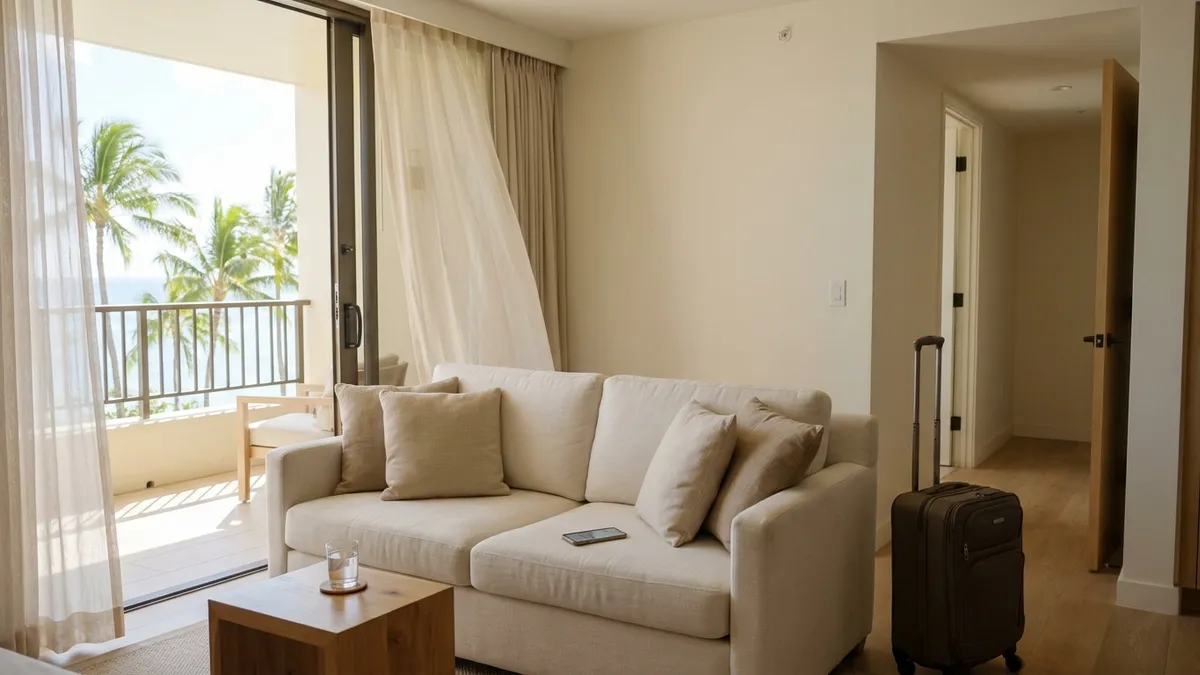
We would check the airline app before leaving the suite, not after. HDOT told passengers to check with their carrier, and Hawaiian urged guests to check flight status before heading to the airport. The phone works just as well from the sofa, and the sofa does not have a line.
We would not race to the airport to sit in a crowded terminal. If the app showed a delay of a few hours, we would ask the front desk about a late checkout or about holding our bags, then wait it out in Waikiki. We don’t rent a car, so the ride to the airport is an Uber or Lyft we can call when the flight time firms up. We have not had to ask for a late checkout on a day like this, so we can’t say how flexible any given property is when everyone checking out has the same idea. Ask early.
We would rebook in the app, not in a counter line. Big Island Now’s San Diego traveler changed his flight in the app and booked a hostel in San Diego for the night. That is the move. If the airline is offering a flexible policy, use it while seats are still open rather than waiting for the original flight to settle down.
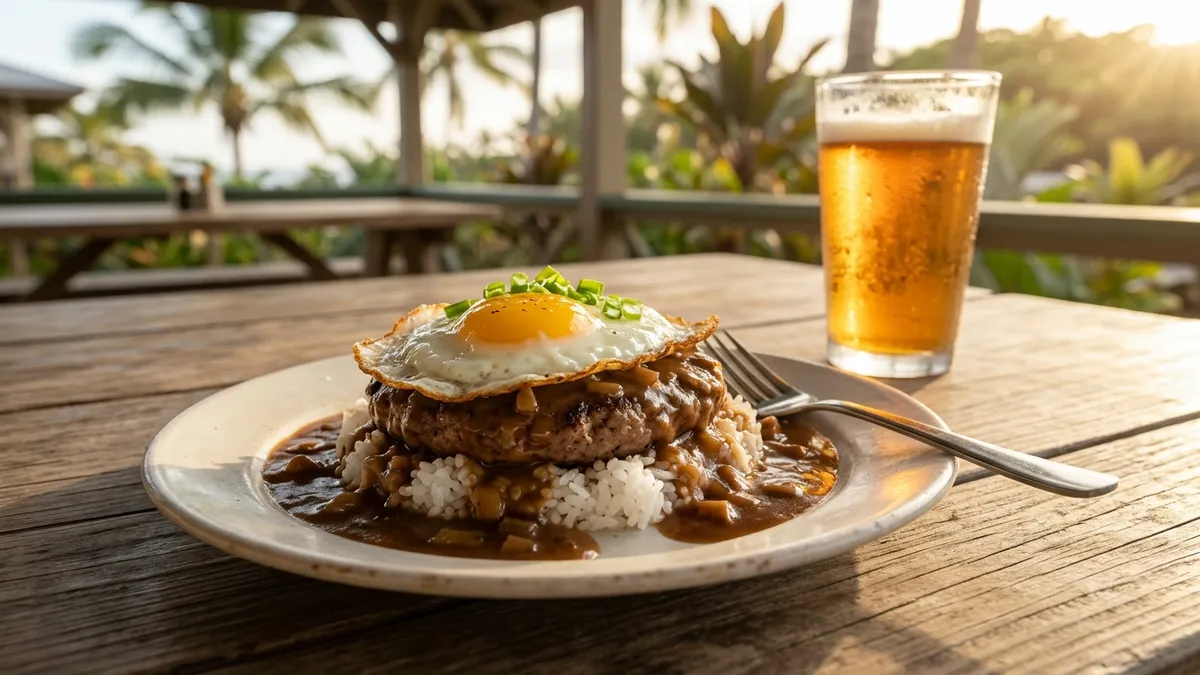
We would eat before we left. HDOT working to keep airport food open is good news, but a crowded terminal is not where we want to look for a meal. A plate lunch in the room and a cold drink from the fridge beats a long queue at the gate.
If you are on an interisland hop, we probably wouldn’t change much beyond a quick status check.
Before you plan around this
- The cause was still under investigation when we checked on November 14, 2026, so we are not drawing conclusions about whether it could happen again soon.
- The times above differ by a few minutes between outlets; we have given each with its source.
- Hawaiian’s flexible travel policy was reported by the Star-Advertiser. We could not load Hawaiian’s travel alerts page to read the terms ourselves, so check your own airline’s site for what it covers and for how long.
- We were not able to load the U.S. Department of Transportation’s passenger refund page when writing this, so we are not summarizing refund rules here. Your airline and the DOT are where to confirm them.
For current airport notices, HDOT’s news page is the official source, and your airline’s app is where your actual flight lives.